Second Circuit rejects Sam Bankman-Fried’s appeal
The Second Circuit upholds Bankman-Fried’s conviction and 25-year sentence, leaving few remaining options for the disgraced crypto executive

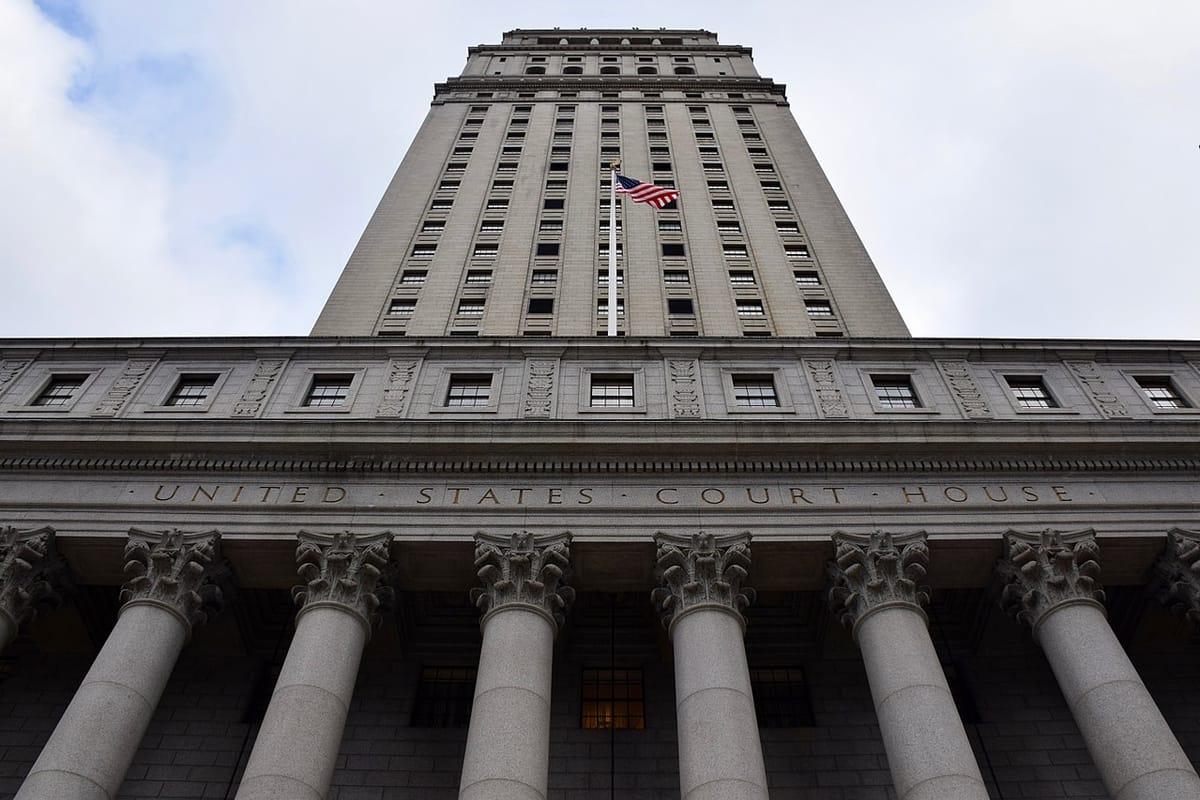
The Second Circuit of Appeals, which in November 2025 heard oral arguments in Sam Bankman-Fried’s appeal of his November 2023 conviction [I96], has upheld the verdict and rejected Bankman-Fried’s request for a new trial with a new judge. I’ve purchased the full document so it’s uploaded to CourtListener’s RECAP archive.
The appeal was one of Bankman-Fried’s few remaining options after Judge Lewis Kaplan denied his motion for a new trial in April [No new trial].
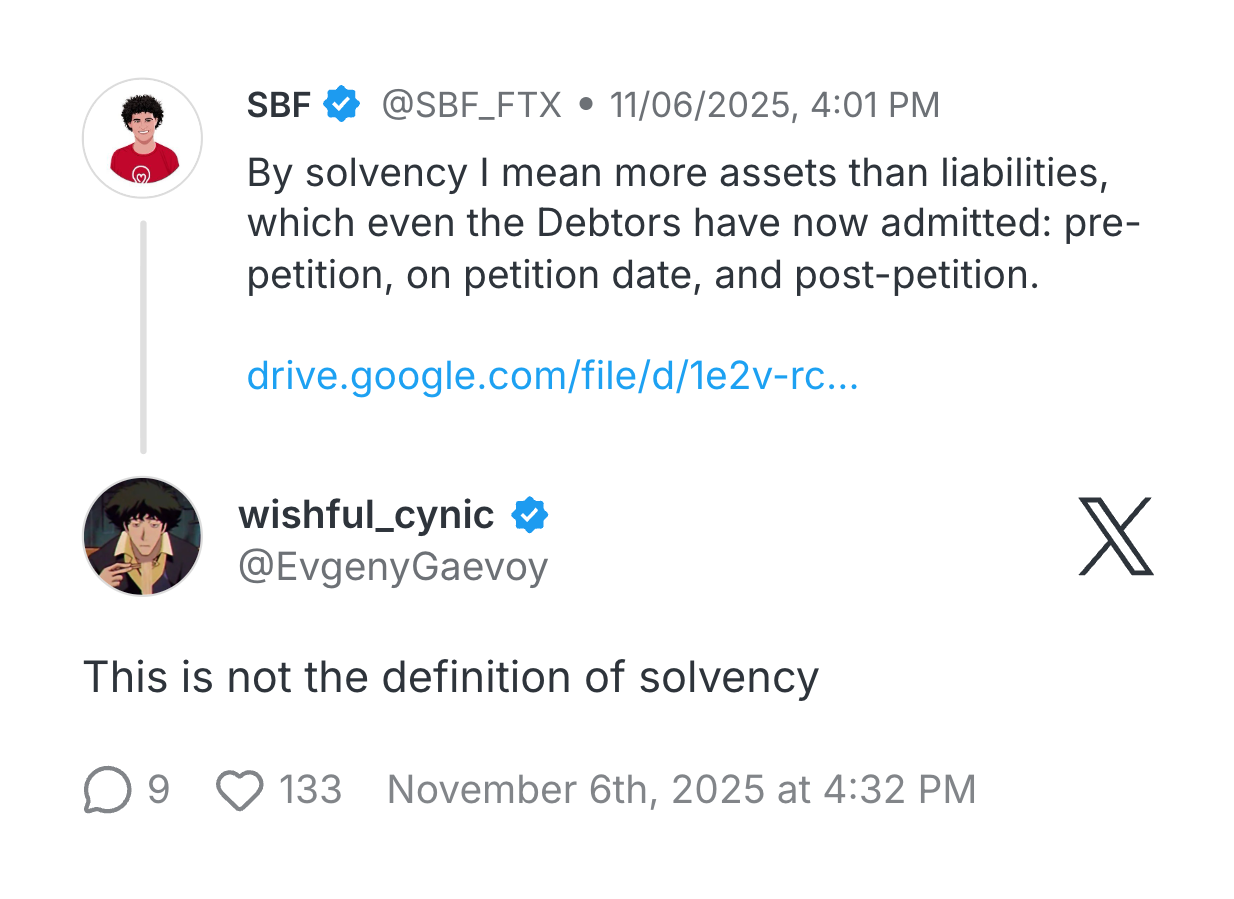
Bankman-Fried tried to argue before the Second Circuit that his FTX cryptocurrency exchange was solvent before, during, and after its bankruptcy, and that its dramatic collapse was simply the result of a temporary liquidity squeeze caused by a sudden wave of withdrawals. (At various points he has made clear that his definition of “solvency” is his own, novel one.)
Indeed, some of FTX’s investments — particularly one in the Anthropic artificial intelligence firm, which develops the now popular Claude suite of AI tools — proved lucrative after FTX’s demise, and substantially helped to fund restitution to FTX’s customers.
The Second Circuit wasn’t persuaded, in part thanks to a Supreme Court decision that came down after Bankman-Fried’s trial. In the 2025 Kousisis v. United States opinion, the Court clarified that someone commits fraud “whenever he uses a material misstatement to trick a victim into a contract that requires handing over her money or property — regardless of whether the fraudster, who often provides something in return, seeks to cause the victim net pecuniary loss.” In other words, if you lied to get people to give you their money, it doesn’t matter if you intended anyone to lose money, or if your investments ultimately paid off.
The Second Circuit confirmed that the government did not need to prove Bankman-Fried intended to cause economic losses to his customers in order to secure a fraud conviction. The court also noted that Bankman-Fried was granted plenty of opportunity to “present his version of events to the jury” during his extensive time on the stand. “His main objection is that he wanted to say more along these lines but was prevented from doing so by the district court. We, however, see no error in the district court’s rulings,” the court wrote, noting that allowing more testimony about his belief that investments would pay off risked “confusing, if not misleading, the jury.”
As for his arguments about the later value of his investments, the Second Circuit confirmed: “Whether the assets purchased by Bankman-Fried appreciated in value is irrelevant as to whether he committed fraud.”
The court also rejected arguments that Kaplan improperly required Bankman-Fried to preview his testimony outside the jury’s presence (which he described as a “deposition”), that jury instructions were erroneous, and that the $11 billion forfeiture was unconstitutional.
Bankman-Fried had argued that he was denied a fair trial because Judge Kaplan, after Bankman-Fried opted not to bring a formal advice-of-counsel defense, prohibited him from discussing his reliance on legal advice from FTX’s attorneys. The Second Circuit found that Kaplan’s decision was reasonable because Bankman-Fried seemed to wish to “focus on the presence or involvement of lawyers without providing ‘any degree of specificity about what they were present for or involved in, what their tasks were, what exactly they knew, and what the defendant knew about what the lawyers knew and were doing.’”
When Kaplan held the “deposition” to understand what Bankman-Fried wanted to say, it turned out that, for most categories of proposed testimony, Bankman-Fried admitted he hadn’t told the lawyers the full story about what he was doing or claimed he couldn’t recall. The ruling noted that Kaplan “was obviously concerned that Bankman-Fried wished to advance some sort of hybrid advice-of-counsel defense without meeting the legal requirements for that defense” — specifically, the requirement that he show he gave his lawyers a complete understanding of what he intended to do, requested their advice as to its lawfulness, received advice that the conduct was legal, and relied upon it in good faith.
Indeed, the Second Circuit found that “For each category of testimony the district court excluded, it is undisputed that FTX lawyers were not informed of all the relevant facts and did not receive full disclosure of the intended use of the documents in question. The fact that lawyers drafted run-of-the-mill corporate documents provided little to no evidence relevant to Bankman-Fried's good faith in using them but created a substantial risk of jury confusion. ... We agree with the district court that the risk of using counsel to create a misplaced air of legality substantially outweighed the probative value of the testimony.”
Bankman-Fried could still seek Supreme Court review, though the odds of the Court taking his case are slim. In the meantime, he’s pursuing another avenue: he’s applied for a presidential pardon from President Trump. Somewhat oddly, though Bankman-Fried has seemed desperate to get out of prison, he’s applied for a “pardon after completion of sentence”. This would not change the fact that he will likely spend the next decade or more of his life behind bars, but would subsequently restore certain rights, such as the ability to vote.1
Although Trump has been a reliable crypto industry ally after accepting hundreds of millions in campaign support and personally profiting by billions thanks to the industry, he has in the past expressed reluctance to the idea of pardoning Bankman-Fried. Unlike other crypto figures who’ve benefited from presidential clemency, such as Binance’s Changpeng Zhao [I95], BitMEX’s Arthur Hayes [I81], and Ross Ulbricht of Silk Road infamy [I75], Bankman-Fried does not enjoy the support of the crypto industry, and a pardon would not likely be welcomed by them. Bankman-Fried also likely lacks the funds with which he could personally enrich Trump or benefit his political causes — another recently popular avenue for securing pardons.
Have information? Send tips (no PR) to molly0xfff.07 on Signal or molly@mollywhite.net (PGP).
I have disclosures for my work and writing pertaining to cryptocurrencies.
[noted] is a short-form companion to Citation Needed. You can manage your email preferences for each separately.