Trump’s crypto company scrambles to save a loan backed by its own token
To save a loan backed by its own token, World Liberty sold its ETH at a loss and borrowed its own stablecoin — raising questions about how much money it actually has.

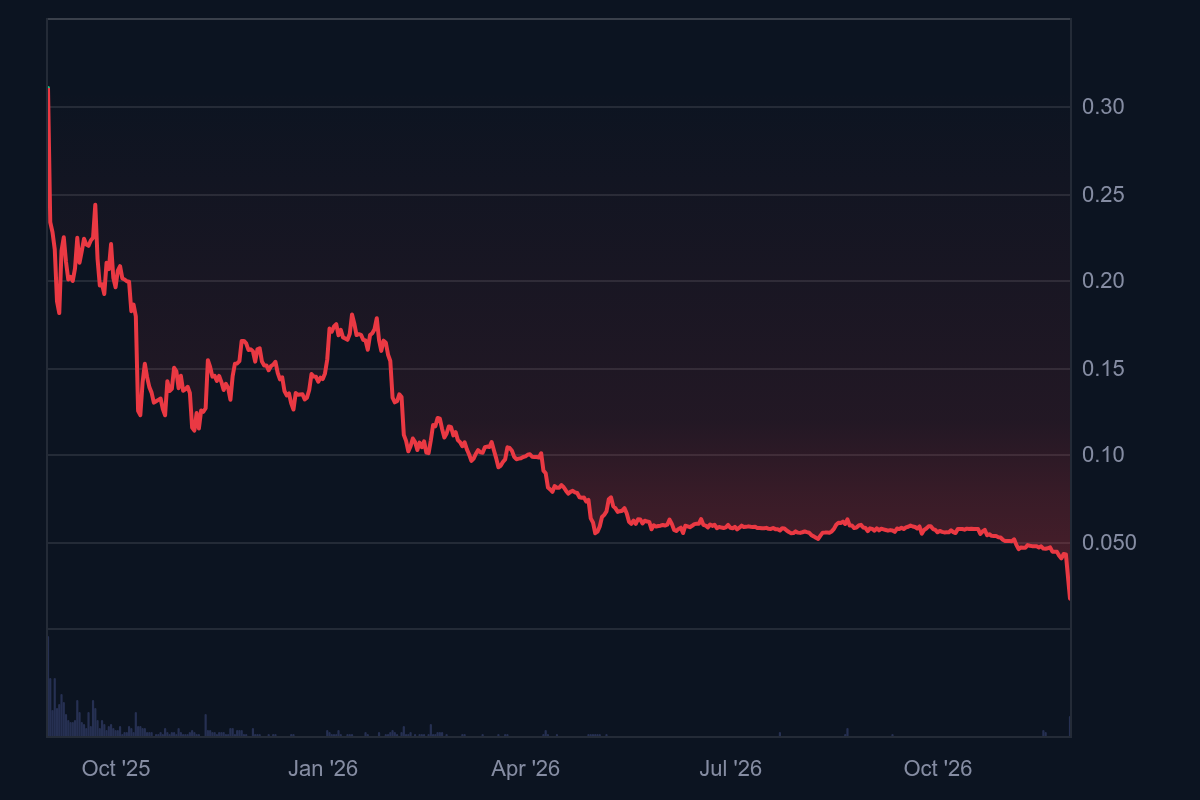
World Liberty Financial, the Trump family’s cryptocurrency company, spent the weekend scrambling to keep a loan backed by its own WLFI token from being liquidated. That token, which has been on the decline more or less continuously since it began trading in September 2025, lost more than half of its remaining value on Friday night, leaving it more than 95% below its all-time high.1
The crash came hours after World Liberty started selling off most of its remaining ETH, for about half of what it paid,2 to shore up its loan. When that wasn’t enough, it moved another billion WLFI tokens it already had on Dolomite to collateralize the loan, and it is now borrowing its own stablecoin at 30% interest.3
The company succeeded in getting its loan to a safer place, but it sold most of its ETH to do it. Outside of the token it issues, on-chain assets in the company’s treasury roughly match what it owes. This raises questions: how much actual money does World Liberty have? And what will it do if the WLFI price falls far enough to put the loan in danger again? It’s certainly possible that the company is holding cash in bank accounts I can’t see, but if it had much, it’s hard to understand why it wouldn’t just use that instead of selling its ETH at a $19 million loss and borrowing its own stablecoin at 30% interest.
The chaos at World Liberty isn’t confined to its WLFI token. World Liberty is also behind USD1, a stablecoin it markets as a safe crypto equivalent to a dollar. Last year, the United Arab Emirates-backed MGX used the USD1 stablecoin for a $2 billion investment in Binance, treating the Trump family to a share of the substantial interest generated on those reserves [I83]. Though there’s no indication USD1 redemptions were impacted by the weekend’s turmoil, holders were clearly feeling jittery. Only approved customers can redeem USD1 directly for dollars through World Liberty’s partner, BitGo. Everyone else has to sell on the open market, and some were evidently nervous enough to sell at up to a 6% loss rather than wait, as the stablecoin briefly lost its $1 peg.4 (Trading firms then bought up the discounted tokens and redeemed them at $1, profiting from the arbitrage and restoring the peg in the process.) USD1’s circulating supply fell by about $250 million in a single day, adding to a decline that has left USD1 with less than half the supply it had at its February peak.5
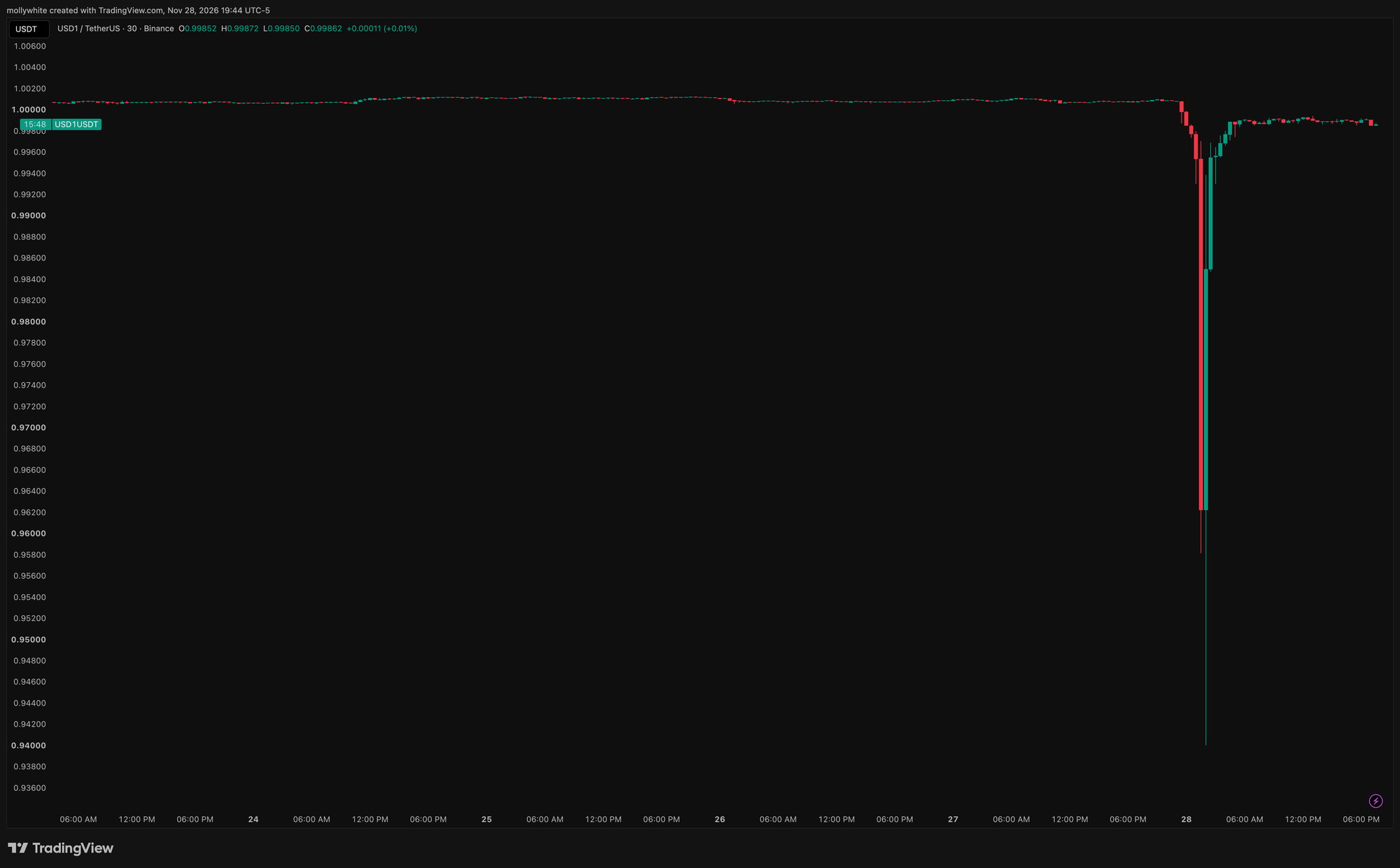
Meanwhile, people who loaned USD1 on Dolomite — a lending platform co-founded by World Liberty adviser Corey Caplan — currently can’t withdraw. Around $105 million in USD1 has been loaned out on Dolomite and all of it has been borrowed, around 30% by World Liberty itself. Lenders can’t get their money back until borrowers repay their loans, and as of Saturday afternoon, there was no USD1 available to withdraw at all.3
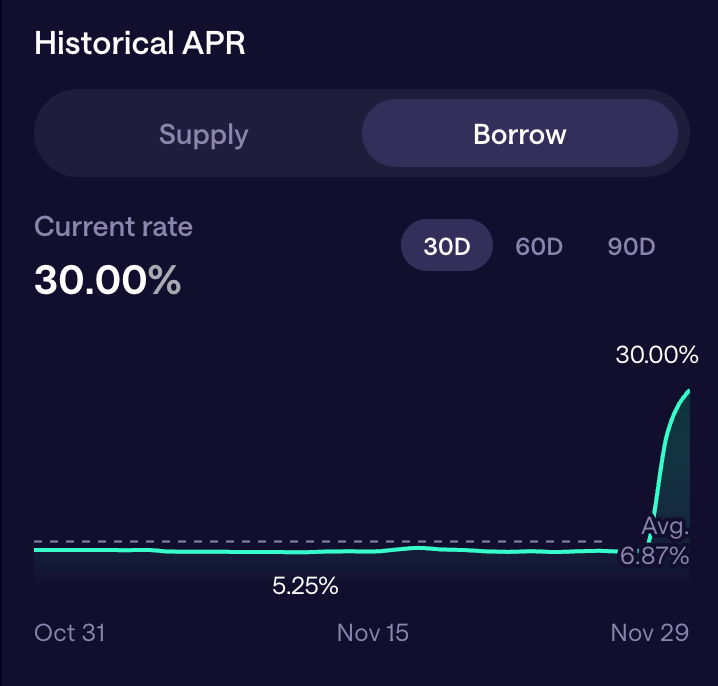
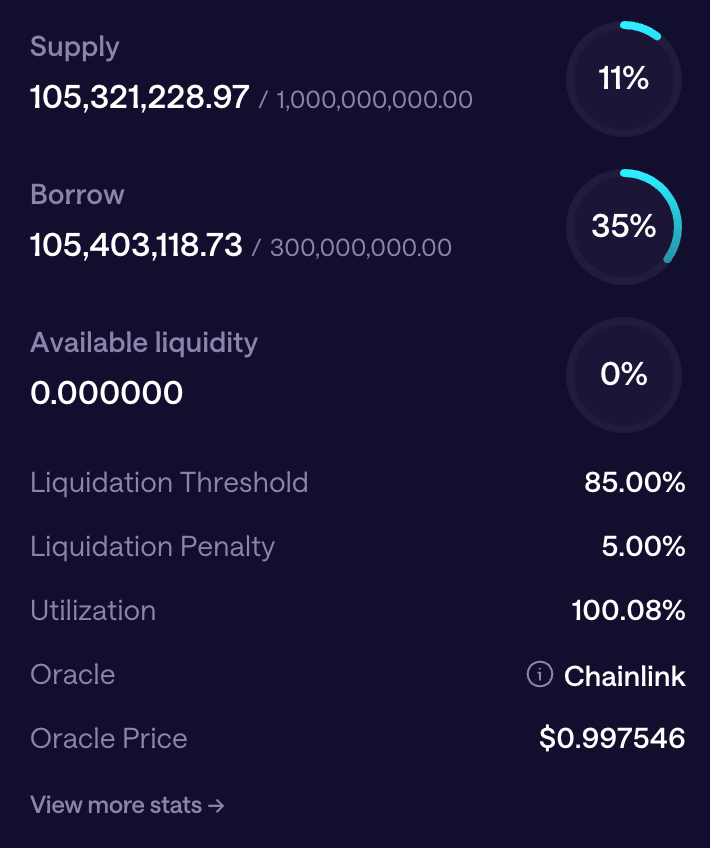
Borrowing rates on Dolomite spiked to 30% as World Liberty borrowed more (via Dolomite)
The president and his family profit from both WLFI and USD1 as his administration writes the rules for the industry. According to Trump’s most recent financial disclosure, Trump-owned entities brought in almost $800 million from World Liberty in 2025, including $527 million in WLFI token sales and $263 million from selling stakes in its holding companies.6 If the loan gets into trouble again, will they put any of that money toward it? Or will someone else? Perhaps one of the many companies and investors with business before the administration, or hopes for friendlier crypto rules, that have already poured money into World Liberty and other Trump-linked crypto ventures? Or will the WLFI buyers and Dolomite lenders be left holding the bag now that the Trump family has already taken its cut?
The loan
As I wrote in April, World Liberty put up around 5 billion of its WLFI tokens as collateral to borrow $75 million on Dolomite: roughly $65 million of it in USD1, World Liberty’s own stablecoin. At the time, the tokens were notionally worth about $450 million. Dolomite was co-founded by Corey Caplan, who joined World Liberty Financial as an adviser in August 2024 and has since described himself as the firm’s Chief Technology Officer. World Liberty offers lending on its website through an embedded version of Dolomite.
Critics quickly pointed out the obvious problem: World Liberty was borrowing against a thinly traded token it created itself and never had to pay for. Borrowing against those tokens allowed World Liberty to turn them into actual dollars without selling any WLFI, placing the risk on the people who loaned the dollars instead. And because WLFI’s price depends on confidence in World Liberty, the loan risked a death spiral: if the price fell far enough to trigger liquidation, Dolomite would be left trying to sell billions of WLFI into a crashing market, pushing the price down further still. Some compared the arrangement to FTX, whose sister trading firm borrowed heavily against FTX’s FTT token. When FTT’s price collapsed in November 2022, so did both companies.
When people voiced their concerns about World Liberty’s loan in April, the company dismissed them as “FUD”:7
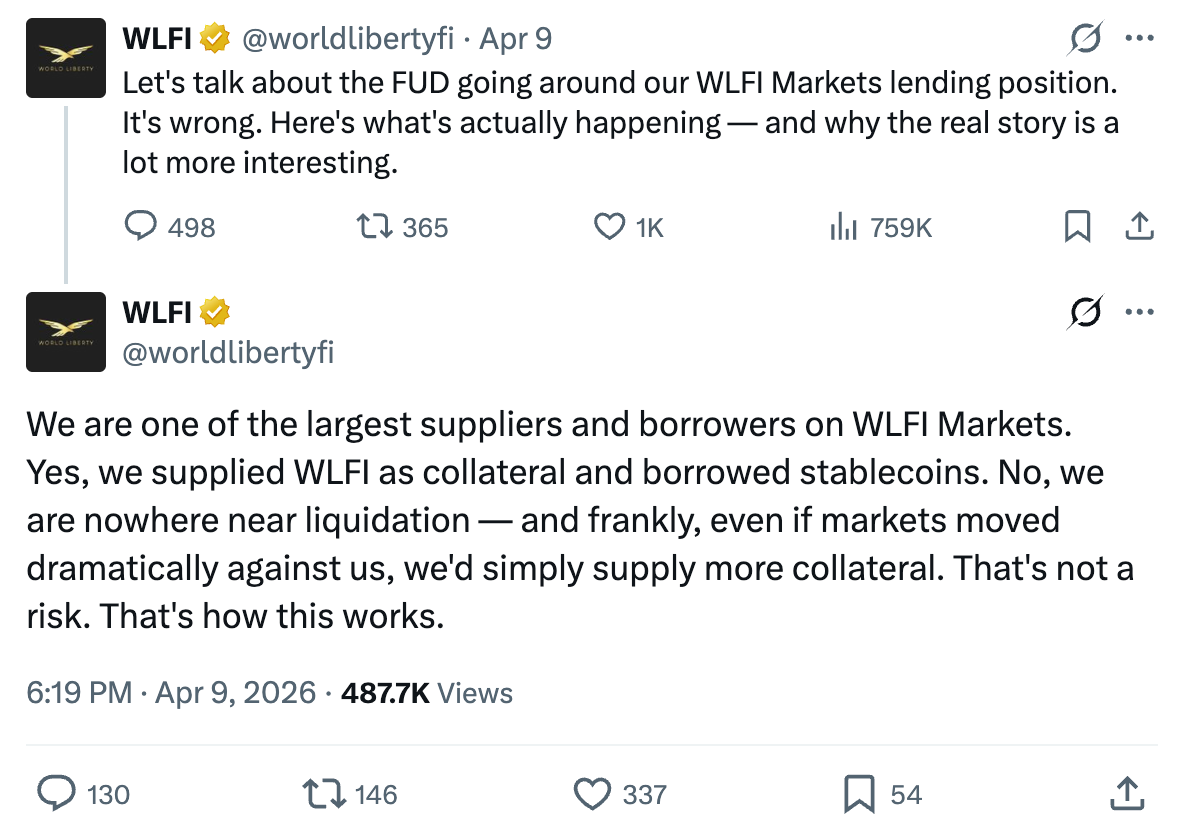
In the same thread, World Liberty described itself as “the anchor borrower” whose borrowing generated “outsized stablecoin yields” for everyone else. It boasted that it had spent $65.58 million buying back 435 million WLFI tokens at an average of about $0.15, “Not because we had to. Because we believe in where this is going.”
At the time, WLFI was trading at around $0.09. Now it’s selling for less than $0.02.1 At today’s price, the roughly 435 million tokens it spent more than $65 million to buy back are priced at around $7.3 million.
Simply supplying more collateral
In April, World Liberty said the loan was “nowhere near liquidation”. But by Friday, it was a lot closer. WLFI was trading at around $0.04, and the loan would be liquidated if it fell to around $0.02. Shortly after 3 pm Eastern, World Liberty began pulling its ETH off Dolomite, where it had been lending it out to earn interest, and selling it. According to blockchain analyst EmberCN, it had purchased its ETH at an average of around $3,244 per token; it sold it at around $1,655.2
| Time | Event |
|---|---|
| Fri 3:09 pm | World Liberty’s strategic reserve wallet withdraws 1,378 mETH (staked ETH) from Dolomite8 |
| Fri 3:10 pm | Withdraws 10,000 ETH from Dolomite9 |
| Fri 3:16 and 3:20 pm | Sells ~10,000 ETH in two trades via CoW Protocol for ~$16.6M USDC1011 |
| Fri 3:22–3:46 pm | Sells the mETH for ~2.5M USD115 |
| Fri 3:26 pm | Deposits 16.59M USDC back into Dolomite12 |
| Fri 3:40 pm | Withdraws another 600 ETH from Dolomite13 |
| Fri 3:44 pm | Sells the 600 ETH for ~$1M USDC14 |
| Fri 3:48 pm | Deposits 2.5M USD1 into Dolomite16 |
| Fri 3:57 pm | Moves 10.66M USDC to the loan position, paying off its USDC debt17 |
| Fri 4:07 pm | Moves 990M WLFI from a different Dolomite position into loan collateral18 |
| Fri 5:48 pm | Withdraws 2,000 ETH from Dolomite, keeps it19 |
| Sat 5:11 am | Borrows 10M USD1 against its own USDC and ETH and uses it to pay down the loan; moves 1B more WLFI from a different Dolomite position into loan collateral20 |
By my math, based on the position’s reported health factor, World Liberty’s actions on Friday brought the liquidation price down to around $0.0118.
It wasn't enough. Overnight, WLFI fell more than 50% to a new all-time low near $0.016, uncomfortably close to the new liquidation price. On Saturday morning, World Liberty borrowed $10 million in USD1 against its other Dolomite position, used it to shrink the balance on the WLFI-backed loan, and moved another 1 billion WLFI into that loan’s collateral, bringing its liquidation price down to around $0.0063. That didn’t reduce World Liberty’s overall debt — it just moved roughly $10 million from the WLFI-collateralized loan to a new loan backed by USDC and ETH. World Liberty still owes around $31 million in USD1 on Dolomite, and it turns out “We’d simply supply more collateral” meant selling the treasury’s ETH at half price and shuffling debt around.
This is precisely the sort of spiral critics warned about back in April. Because the loan is backed by WLFI, its sinking price brings the loan closer to liquidation. And because token movements are visible on-chain, traders see a company selling off its treasury to save a loan backed by its own token, and rightfully become concerned. WLFI’s price fell by half overnight, and World Liberty had to rescue the position a second time.
After the weekend, World Liberty’s Strategic Reserve wallet and its Dolomite positions hold around $31 million in non-WLFI assets like USDC, ETH, and its own USD1 stablecoin — almost exactly what it owes. Its other publicly identified treasury wallet holds nothing but WLFI.
Meanwhile, the part of World Liberty’s business that actually generates income is shrinking. Unlike WLFI, USD1 earns interest on the reserves backing it, some of which flows to the Trump family. When the company dismissed the Dolomite “FUD” in April, it boasted of USD1’s “$159.5M annual revenue run rate.”7 USD1’s supply was around $4.3 billion at the time. Now that it’s fallen by 40%, the income from its reserves has presumably fallen along with it.
World Liberty’s response
World Liberty’s first public statement, made Saturday morning, didn’t mention the ETH sale, the loan, or USD1’s depeg at all. Instead it pointed traders at Binance, which had forcibly closed some customers’ profitable WLFI perpetual futures positions through what appears to have been auto-deleveraging, a standard mechanism used by exchanges to avoid accumulating bad debt when prices move so fast that losing positions can’t be liquidated quickly enough to cover winners. World Liberty stressed that Binance “independently operates and manages its perpetual futures markets”, that World Liberty “had no involvement”, and that affected users should contact Binance support.21 All of that is technically true, but it also conveniently cast Binance as responsible for a predictable consequence of WLFI's own downward spiral. Binance later said it was “actively reviewing the market activity”.22
On Saturday afternoon, World Liberty Financial posted a longer statement, saying that its Friday actions were simply “proactive steps to strengthen its treasury and reduce liquidation risk amid a broader crypto market downturn.” It confirmed the broad outline of what I described above: that it had sold “a portion of our treasury-owned ETH and mETH” to pay down debt, closed one of its lending positions, and consolidated its WLFI collateral to bring the liquidation price from “above $0.02 to approximately $0.00631”. It noted, “not a single WLFI token was sold as part of this process”, and asserted that the moves were “not a reflection of diminished confidence in WLFI or the broader crypto market.”23
It’s true that the crypto market is down, and World Liberty’s loan is indeed safer than it was on Friday. But much of the statement is spin. World Liberty’s actions on Friday came only as WLFI’s price continued to sink nearer to the loan’s liquidation price, and Saturday’s came after it got within fractions of a cent of it. That’s not what most people mean by “proactive”. And much of the reduction in World Liberty’s debt came from closing out a position where it had borrowed its own stablecoin against other stablecoins. It still owes around $31 million in USD1, and $10 million of the debt it “paid down” was actually a new loan it took out to pay off some of the WLFI-backed one. WLFI hasn’t fallen 95% because of a broad crypto market downturn; sure, bitcoin and ETH are down, but not 95%. And World Liberty is telling the truth when it says it hasn’t sold any WLFI, opting to sell everything else instead. But is that out of confidence in its own token, or because it’s beginning to run out of willing buyers?
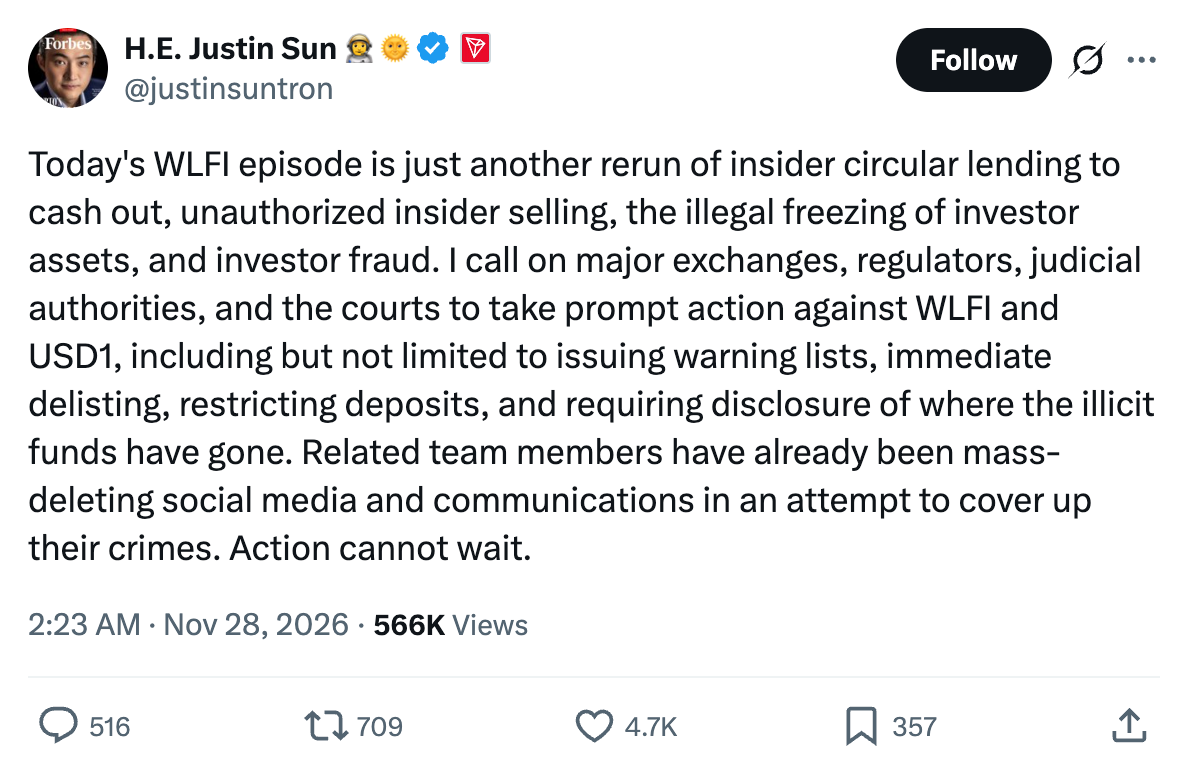
Justin Sun, who is suing and being sued by World Liberty [I105], called the incident “another rerun of insider circular lending to cash out”, urged exchanges to delist WLFI and USD1, and asked for regulators to step in. Sun is hardly a neutral party, nor is his reputation anything close to pristine. But it’s hard to come up with a better description of a company borrowing its own stablecoin against its own governance token from a platform built by its own advisor.
While some may feel a twinge of schadenfreude seeing World Liberty flounder, it’s important to remember that the Trump family’s exposure is largely notional at this point. The family does hold around 22.5 billion WLFI,24 worth around $360 million on paper at Saturday’s prices (down from several billion dollars on paper in better days). But the Trump family has mostly already collected its payout — in real cash, not illiquid tokens — via the early token sales and equity sales.
WLFI buyers are another story. When the token first began trading on the secondary market in September 2025, it opened at $0.31 and quickly climbed to $0.46.25 Anyone who bought at the opening price has now lost about 95% of their money. Buyers in the presale paid just $0.015 or $0.05 per token: a fraction of what everyday people could hope to pay when trading first became available to them. Even so, some of them are now underwater. The Trump family got its tokens for nothing, plus a hefty cut of the token and equity sale revenues. It’s a pattern that Reuters highlighted in June, finding that the Trumps’ wealth had increased by at least $2.3 billion thanks to their crypto ventures, while more than a million investors took a $2.3 billion hit.25
And not every buyer is a crypto executive with money to spare, for whom regulatory and legal leniency might be reward enough. By the end of April, when WLFI was still trading around 6 cents, Reuters estimated WLFI investors had already lost $674 million. Some never bought WLFI directly: an Indiana machinist put $40,000 — 30% of his portfolio — into ALT5 Sigma, the Nasdaq-listed company that raised $750 million to buy WLFI tokens. He had lost about $32,700 as of Reuters’ story.25 World Liberty was on both sides of that deal: ALT5 Sigma, since renamed AI Financial, is chaired by World Liberty co-founder Zach Witkoff, with fellow co-founder Zak Folkman on its board and Eric Trump as a board observer.26 World Liberty’s own leadership is overseeing a public company that spent its shareholders’ money on World Liberty’s token, under an arrangement that sends 75% of World Liberty’s token sale proceeds (after expenses) to the Trump family.24
World Liberty Financial did not immediately respond to a request for comment.
References
“Trump-linked crypto token WLFI plunges 50% to record lows”, CoinDesk. ↩
Donald Trump’s Executive Branch Personnel Public Financial Disclosure Report, June 29, 2026. ↩
Tweet thread by World Liberty Financial. ↩
3:09 pm 1,378 mETH withdrawal from Dolomite, Etherscan. ↩
3:10 pm 10,000 ETH withdrawal from Dolomite, Etherscan. ↩
3:16 pm 5,000 ETH sale via CoWSwap, Etherscan. ↩
3:20 pm 5,000 ETH sale via CoWSwap, Etherscan. ↩
3:22–3:46 pm mETH sales via CoWSwap, Etherscan. ↩
3:26 pm 16.59M USDC deposit to Dolomite, Etherscan. ↩
3:40 pm 600 ETH withdrawal from Dolomite, Etherscan. ↩
3:44 pm 600 ETH sale via CoWSwap, Etherscan. ↩
3:48 pm 2.5M USD1 deposit to Dolomite, Etherscan. ↩
3:57 pm pays off 10.66M USDC debt on Dolomite, Etherscan. ↩
4:07 pm moves 990M WLFI to the Dolomite loan, Etherscan. ↩
5:48 pm 2,000 ETH withdrawal from Dolomite, Etherscan ↩
Saturday 5:11 am moves 10M USD1 and 1B WLFI to the Dolomite loan, Etherscan ↩
World Liberty Financial website fine print. (Archive). ↩
“Under the Trump crypto playbook, the family always wins. Investors don’t”, Reuters. ↩
AI Financial Form 10-Q, filed for the quarterly period ended March 28, 2026. ↩
Have information? Send tips (no PR) to molly0xfff.07 on Signal or molly@mollywhite.net (PGP).
I have disclosures for my work.